In 1926, Frank Place came home from serving in the First World brought a farm in Tunstead, Norfolk.
That’s how our story began. Today, a century on, Frank’s family are still here, proudly farming the very same land.
Before Church Farm
Before we came to Church Farm, farming was already in our blood, and can be traced back through the Place family tree to the Victorian era.
Long before making the move to Norfolk, historical records show the Place family were Suffolk farmers, faming land at Eriswell and Wingford.
And during Jabez Place’s time (Frank Place’s father) at Eriswell Hall, 3,000 acres were farmed at Prince Duleep Singh’s estate – the last ruler of the Sikh Empire – working the land at the Elveden estate in 1880.
Farming was already the family trade. Church Farm went on to become the much-loved site where Place’s went on to set down firmer roots.
 The start of Church Farm
At 20 years old, Frank Place was called up for service in the First World War, awarded the Military Cross for conspicuous gallantry and devotion to duty.
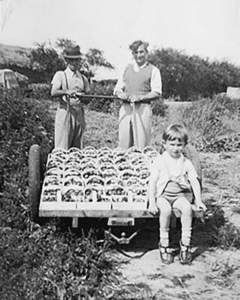
Returning home to Norfolk in the 1920s, in 1926 he purchased Church Farm with the plan to use the land for mixed farming – both arable and livestock. But with the farm struggling, and looking for alternative ways to turn a profit, Frank diversified and started planting raspberries, selling the fruit on in wooden baskets to a wholesale merchant in London.
Royal raspberries
This move to fruit proved fruitful, and by 1937, the farm’s ‘Lloyd George’ raspberries and ‘Royal Sovereign’ strawberries had built up such a reputation that were deemed fit for a king, supplied to King George’s garden parties at Buckingham Palace, through a stall at Covent Garden.
Protecting British soil
When the Second World War came, Frank played an important role again – stepping up to run the local Home Guard, with an air raid shelter on the farm and fuel stored alongside it.
And the farm played a part in defending British soil, as well as protecting people, with a decoy runway and searchlights installed at the far end of the land, designed to draw bombers away from the real airfield nearby.
That field is still called Searchlight Field today and is where our reservoir sits now: the same ground that once protected an airfield now irrigates our fruit, protecting our crops.
Soft fruit sales soar
In 1954, the business R & JM Place Ltd was formed under the leadership of John Place, Frank’s son.
Inspired by his father’s first foray in soft fruit, John decided to push on and take the farm even further, increasing its crops of soft fruit to include strawberries, growing berries for jam, yoghurt, ice cream and dessert manufacturers.
This era marks a part of our history that generations of Norfolk families still have a memory of today, and we still meet people who love to share stories of what the farm was like, way back then.
Pickers would turn up at the field, handed a basket by a supervisor and directed down a row, picking fruit for as long as you liked. Handing over their fruit for weighing, each worker was paid in cash, on the spot.
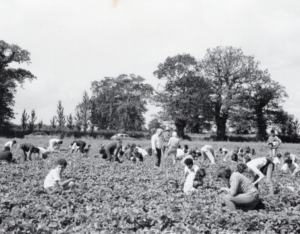 The pick your own era
By the 1970s, the farm had planted a great deal of fruit and needed a new way to sell it. The answer John Place settled on was the launch of ‘pick-your-own’, and it was more popular than anyone had expected.
The opportunity to pick and take home your own strawberries brought local traffic to a standstill, and roads around Tunstead had to be change to a one-way system to cope with the influx of people.
A new addition – IQF freezing
The 1980s brought with it a risk to the business, with the business facing the threat of cheap imported jam fruit entering the UK from Eastern Europe. But with a sharp business mind, John saw it coming and was prepared.
He installed an IQF freezing factory and cold stores on the same site as the farm, allowing the farm to process and freeze fruit, this decision moved the business towards a higher-end dessert market.
A food processing pioneer – where John Place led, others followed, and by 1986, competitors across Europe were installing IQF freezers of their own.
Around the same time, John joined the Kentish Gardens cooperative (known today as Berry Gardens) as a route to sell fresh fruit to the UK’s supermarkets.
Being part of this cooperative meant the business benefitted from new growing knowledge, and the farm evolved rapidly, with raised beds, polythene mulches, trickle irrigation and polytunnels arriving on site.
Investment in tunnels and improved fresh varieties also meant the farm could extend its growing season from just six weeks to six months.
In the hands of the third and fourth generations
Tim Place joined the business in the early 1980s, as the third generation of the Place family, and spent most of his early career years in the engineering department and the freezer factory before becoming Operations Manager.
Working his way up and through the business, to understand every part, Tim became Managing Director in 2000 and modernised the company’s image that same year under a new name: Place UK.
The projects that followed have created the site we all work on today – bringing in a significantly expanded freezer factory. And in 2015, another investment was made with a retail packaging factory installed on site, the place where we pack all our smoothie ranges today.
In 2021, Tim stepped away from the MD role, but remains group chairman of R & JM Place Ltd.
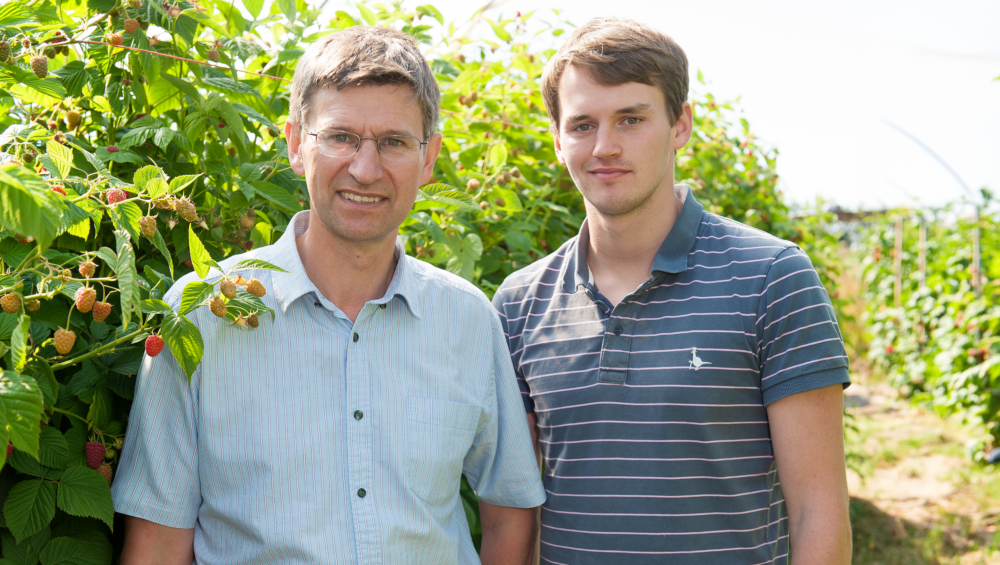
Reflecting on 100 years of the Place family owning, farming and evolving the land at Church Farm, Time says:
“My grandfather, Frank Place, came home from the First World War, moved to Norfolk in the 1920s and bought Church Farm 100 years ago.
“We’ve done so much on this land since — from arable and livestock, then soft fruit, bringing IQF freezing into the business, building the factories, putting in the reservoirs.
“And we’re still here, on the same ground, still a family business. Not many people get to say that. I’m very proud of it.” Tim Place, Group Chairman
Looking to the future, Tim’s son Ben Place is now at the business, joining in 2021 and now heads up our frozen retail business, including the smoothie packs.
Ben says the farm’s centenary is the right time to take stock, honour our history, while looking to the future too.
“Four generations have farmed on this land, and I am proud to carry that, but I am just as invested in what we do with the next 100 years. The business will keep changing; it always has. What won’t change is the family at the core of it, still here on Church Farm, still farming the same ground.” Ben Place, Head of Retail Sales
In 1926, 100 years ago, the Place UK story began, when a young man with a Military Cross bought a farm and started planting raspberries.
And here we still are. Still growing. Still operating as a family team.
If you’ve been part of one of our many chapters, please get in touch, we would love to hear your stories.
- We’re marking 100 years of Church Farm throughout 2026. If you picked fruit here, worked a season with us, or have a photograph or a story from your days on our farm, we would love to hear from you: getintouch@placeuk.com